


December 16, 2025 | Black & Kletz Allergy
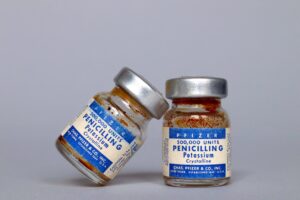 Adverse reactions to medications are very common. Among the drugs associated with immediate hypersensitivity reactions (i.e., IgE antibody-mediated allergic reactions), penicillins are the most commonly observed.
Penicillin allergy is reported in approximately 7 to 10% of the community population and it occurs in up to 20% of hospitalized patients. However, more than 90% of these patients do not have true penicillin allergy, which can be ruled out with the help of a standardized testing procedure. These patients are mislabeled as having a penicillin allergy which can be deleterious to them as penicillins will be avoided in the future for often less effective and more costly alternative antibiotics.
There are 3 common causes for this high rate of false positive penicillin allergy reports:
- Mislabeling of a side effect (i.e., gastrointestinal upset) as an “allergy”
- Coincidental event (i.e., headache or rash due to an underlying infection)
- Loss of true sensitivity over time with avoidance of penicillins
Penicillin skin testing was introduced as a diagnostic intervention for the evaluation and management of patients with a history of penicillin allergy in the 1960’s. This procedure is commonly performed and has minimal risk. Penicillin skin testing can be performed safely in properly selected patients with suspected penicillin allergy such as in pregnant women with streptococcal infections.
The procedure for penicillin skin testing involves 3 stages:
- Skin prick testing with a small amount of diluted penicillin antigens, that are commercially prepared testing reagents, with negative and positive controls.
- If the prick tests are negative after 20 minutes, a tiny quantity of the antigen is injected into the superficial layers of the skin (i.e., intradermal skin test).
- If the intradermal skin test in the second stage above is also negative after 20 more minutes, the patient will be given 250 mg. of amoxicillin by mouth (i.e., oral challenge) and will be closely monitored for 90 minutes.
If the patient tolerates all 3 stages without any adverse effects, the patient can receive penicillins if needed, without an increased risk of an immediate allergic reaction. The negative predictive value of penicillin allergy testing is more than 99%.
Penicillin allergy testing should be performed in a health care setting only by clinicians with the knowledge, training, and experience to select appropriate patients for this procedure, interpret test results, and manage a systemic allergic reaction should it occur.
Unverified penicillin allergy in hospitalized patients is associated with longer hospital stays and increased rates of serious drug-resistant infections. The alternative antibiotics to penicillin can be associated with higher cost and/or a greater risk for untoward effects.
For this reason, the “Choosing Wisely” program of the American Board of Internal Medicine Foundation recommended in 2014 that physicians not overuse non-penicillin antibiotics in patients with a history of penicillin allergy, without an appropriate evaluation. The National Quality Partners’ Antibiotic Stewardship Action Team recommends penicillin allergy skin testing as a component of a comprehensive antibiotic stewardship program.
Penicillin allergy testing is associated with an unrealized potential. This procedure can accurately identify the approximately 9 out of 10 patients who, despite reporting a history of penicillin allergy, can receive penicillins safely.
Based on current evidence, the American Academy of Allergy, Asthma and Immunology (AAAAI) believes that performing penicillin allergy testing more frequently so that it becomes more routine will result in reduced costs, enhanced patient safety, and improved outcomes.
The board certified allergy doctors at Black & Kletz Allergy are always available for our patients to ask any questions that they may have regarding penicillin allergy testing. We have been diagnosing adult and pediatric patients with penicillin allergy or possible penicillin allergy for many years in addition to diagnosing and treating patients with other allergic conditions such as other medication allergies, allergic rhinitis (i.e., hay fever), asthma, eczema (i.e., atopic dermatitis), hives (i.e., urticaria), insect sting allergies, eosinophilic disorders, food allergies, mast cell disorders, and immune disorders for more than 50 years. We have 3 office locations in the Washington, DC, Northern Virginia, and Maryland metropolitan area with offices in Washington, DC, McLean, VA (Tysons Corner, VA), and Manassas, VA. All our offices offer on-site parking and the Washington, DC and McLean, VA offices are Metro accessible. There is a free shuttle that runs between our McLean, VA office and the Spring Hill metro station on the silver line. If you would like to be evaluated for a penicillin allergy or any other allergic or immunologic condition, please call us today. You may also click Request an Appointment instead and we will respond to your request within 24 hours by the next business day. The allergy specialists at Black & Kletz Allergy pride themselves for providing the highest quality allergy care in the Washington, DC metro area.