


July 24, 2026 | Black & Kletz Allergy
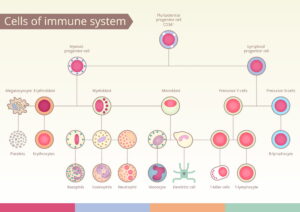 We have an immune system primarily to defend and protect us from invaders such as bacteria, viruses, fungi, parasites, and tumors. The cells and tissues that make up the immune system, are spread out throughout our bodies, rather than being in a single organ. These cells are concentrated in the lymph nodes, bone marrow, and in the thymus, a small gland in the neck. They also circulate in the bloodstream.
There are 3 major ways that the immune system can malfunction causing diseases and disorders.
Deficiency:
A properly working immune system is essential for maintaining normal function of various organs. The immune system has 2 principal components, humoral immunity and cellular immunity. They both work in tandem to fight external invaders. They also act as an internal surveillance system in order to detect and attempt to eliminate threats such as cancers.
The humoral immune system is comprised of proteins called antibodies (i.e., immunoglobulins) and the cellular immune system is mediated by a type of white blood cell called lymphocytes. Either the reduction in the numbers of antibodies and lymphocytes or the impairment of their function can lead to a defective defense mechanism and lead to frequent infections and/or tumors.
Immune deficiency disorders may be primary (i.e., present from birth) or acquired (i.e., later in life). Primary immunodeficiencies are usually caused by genetic defects that affect the development or function of the immune system. People are born with these defects, although the symptoms may not appear until later in life. Some of these conditions are very serious and incompatible with life and others need life-long treatments with immunoglobulin supplementation on a regular basis to ward off frequent and severe infections. Secondary immunodeficiencies develop because something damages or suppresses an otherwise normal immune system. Secondary immunodeficiencies can be caused by treatments with medications such as corticosteroids, chemotherapy, and/or immunosuppressants. Certain viral infections may also lead to acquired immunodeficiencies. HIV causing AIDS is an example of how a viral infection may lead to a secondary immunodeficiency. Malnutrition, some cancers, aging, chronic diseases (i.e., kidney failure, diabetes mellitus) may also cause secondary immunodeficiencies. Unlike primary immunodeficiencies, many secondary immunodeficiencies improve if the underlying cause is treated or removed.
Autoimmunity:
Instead of identifying and attacking the external threats, sometimes the immune system turns against our own organs, resulting in their dysfunction. Systemic lupus erythematosus (SLE) is a common example of such an autoimmune phenomenon. Autoimmunity also plays a role in many conditions such as rheumatoid arthritis, Type I diabetes mellitus, thyroid conditions (e.g., Graves’ disease, Hashimoto’s thyroiditis), inflammatory bowel disease (e.g., Crohn’s disease, chronic ulcerative colitis, celiac disease) and neurological disorders (e.g., multiple sclerosis, myasthenia gravis).
Autoimmune disorders are diagnosed by measuring the levels of “autoantibodies’ in the blood. Though many of these diseases are not curable, they can be treated with anti-inflammatory drugs to reduce the symptoms and preserve the function of the organs.
Allergy:
Allergic diseases are usually a result of mistaken identity. In an allergic reaction, the immune system considers normally innocuous substances such as pollens, foods, insects, and certain medications as potentially harmful, and it then mounts a defensive attack against them! The underlying causes for this phenomenon are not clearly understood, but genetic abnormalities are thought to predispose certain individuals to these disorders.
The manifestations of allergy can vary depending on the organs affected. Allergens in the air we breathe such as dust mites, mold spores, and pollens (e.g., trees, grasses, weeds) primarily affect the respiratory tract. Upper respiratory symptoms, referred to as allergic rhinitis (i.e., hay fever) may negatively impact the quality of life and lower respiratory involvement may lead to more severe conditions such as asthma.
Milk, wheat, soy, nuts, and seafood are the most common foods that cause allergic reactions. The symptoms of food allergies usually involve the gastrointestinal tract and the skin (e.g., eczema, hives, swelling episodes), but allergic reactions to foods can also lead to a severe systemic and generalized reaction known as anaphylaxis.
Honey bees, yellow jackets, hornets, wasps, and fire ants are the common insects that may cause severe allergic reactions. Penicillin and sulfa are the most common medications that may cause allergic reactions, though any drug can theoretically cause an allergic reaction. Sensitivity to insect venoms and medications can also result in life-threatening reactions such as anaphylaxis. Any patient with a history of having a systemic reaction to a food, venomous insect, or any product, should always carry an epinephrine-containing auto-injectable device such as an EpiPen, Auvi-Q, Adrenaclick or an epinephrine containing nasal spray such as Neffy. It should be noted that if a patient uses the epinephrine-containing auto-injectable device, they should go immediately to the closest emergency room.
The diagnosis of an allergic disorder begins with a comprehensive history and physical examination followed by confirmatory allergic skin test and/or blood tests.
The treatment of an allergic condition usually involves:
- Avoidance of the offending allergen
- Medications to control inflammation and to reduce symptoms
- Epinephrine auto-injectors or nasal sprays for emergency use immediately after the first sign of a systemic reaction.
- Allergy immunotherapy (i.e., allergy desensitization, allergy hyposensitization, allergy shots, allergy injections) to build up a tolerance to the allergens in order to reduce the risk of future reactions and minimize symptoms and the need for medications in the long run.
The board certified allergists at Black & Kletz Allergy are here for you if you are concerned that you may have allergies or an immune problem. We have 3 convenient office locations in the Washington, DC, Northern Virginia, and Maryland metropolitan area. We have offices in Washington, DC, McLean, VA (Tysons Corner, VA), and Manassas, VA. All of our offices offer on-site parking and the Washington, DC and McLean, VA offices are Metro accessible. The McLean, VA office has a free shuttle that runs between our office and the Spring Hill metro station on the silver line. If you suffer from any allergies, asthma, or immune disorder, please call us to schedule an appointment. Alternatively, you can click Request an Appointment and we will respond to you within 24 hours by the next business day. Black & Kletz Allergy has been providing excellent allergy and asthma care in the Washington, DC metro area for more than 50 years and we look forward to helping you.