


January 09, 2025 | Black & Kletz Allergy
An eosinophil is a type of white blood cell that has a role in fighting against parasitic infections and responding to allergens. Eosinophils normally constitute about 5 to 8% of the white blood cells in one’s bloodstream. Their absolute numbers range from 100 to 500 eosinophils per microliter of blood.
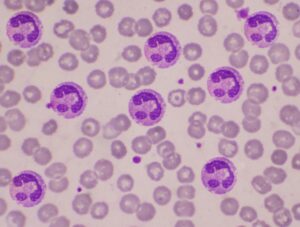 In individuals who are atopic, (i.e., people with a higher incidence of allergic disorders), there will be a higher number of eosinophils in the blood. When there are higher number of eosinophils in the blood than normal, the condition is called eosinophilia. In a disorder named hypereosinophilic syndrome (HES), there are much higher numbers of eosinophils in the blood. Individuals with hypereosinophilic syndrome usually have more than 1,500 eosinophils per microliter in their blood for 6 months or more, and the cause cannot be identified. In addition to being located in the bloodstream, the eosinophils in hypereosinophilic syndrome may also accumulate in various tissues. This excessive eosinophil deposition into the tissues may lead to tissue damage and loss of function.
Many organs including the heart, lungs, brain/nervous system, kidneys, stomach/intestines, bone-marrow, and skin may be affected in hypereosinophilic syndrome. Untreated, this condition can be life-threatening, however, early diagnosis and specific treatments can protect the organs from getting damaged.
Fortunately, hypereosinophilic syndrome is a rare condition. It has a predilection for the male gender, with a male to female ratio of approximately 8 to 1. It occurs most commonly in individuals between 20 and 50 years of age, although it can affect anyone of any age.
Causes of Hypereosinophilic Syndrome:
The exact cause of hypereosinophilic syndrome is not well understood, however, some patterns are known to occur as below:
- Some types of hypereosinophilic syndrome tend to run in families. There are some abnormalities in the genes coding for eosinophils in certain individuals.
- Higher than normal levels of a protein called Interleukin-5 (IL-5), a growth factor for eosinophil growth and differentiation, may be found.
- Some types are associated with certain kinds of cancers such as myeloproliferative disorders. These disorders are characterized by excessive blood cell production in the bone marrow.
- May be associated with certain infections (i.e., parasitic)
Symptoms of Hypereosinophilic Syndrome:
The symptoms of hypereosinophilic syndrome are dependent on the organs primarily affected. Some of the symptoms associated with the syndrome may include:
- Skin rash, pruritus (i.e., itching)
- Cough, shortness of breath
- Dizziness
- Fatigue
- Fevers
- Abdominal pain, diarrhea
- Joint stiffness, joint pain
- Mouth sores
- Memory loss
- Tingling and numbness of the extremities
- Blurred vision, slurred speech
Diagnosis of Hypereosinophilic Syndrome:
It is important to rule out other conditions with similar symptoms since the symptoms of hypereosinophilic syndrome are quite common. Some of these conditions may include allergic diseases, parasitic infections autoimmune disorders, and drug reactions. Below are some standard recommended diagnostic tests that may help diagnose the syndrome:
- Blood counts: Absolute eosinophil count greater than 1,500 per microliter on at least 2 occasions
- Anemia: Found in more than 50% of patients
- Serum tryptase levels: Elevated in some genetic variations
- Bone marrow biopsy: May be needed in specific situations
- Electrocardiography (EKG)
- Echocardiography
- Troponin levels
- Pulmonary function tests (PFT)
- Tissue biopsy: May be required to demonstrate eosinophilic infiltration
Treatment of Hypereosinophilic Syndrome:
- In all patients without a genetic mutation, glucocorticoids are the first-line therapy.
- Interferon-alpha and hydroxyurea are the recommended second-line drugs.
- For third-line therapy, high-dose (400 mg/d) imatinib (i.e., Gleevec) is the treatment of choice.
- For patients with a genetic mutation, imatinib (i.e., Gleevec) is the drug of choice.
- In 2020, the U.S. Food and Drug Administration (FDA) approved mepolizumab (i.e., Nucala) for adults and pediatric patients aged 12 years and older with hypereosinophilic syndrome. Mepolizumab is a humanized monoclonal antibody specific for interleukin-5 (IL-5), and is the first treatment shown to reduce disease flares.
- In refractory cases, particularly those resistant to imatinib (i.e., Gleevec) therapy, hematopoietic stem cell transplantation (HSCT) has been shown to reverse the organ dysfunction.
Monitoring Hypereosinophilic Syndrome:
- Peripheral blood eosinophil count and serum troponin levels every 3 months.
- Echocardiograms and pulmonary function tests every 6 months.
The board certified allergy specialists at Black & Kletz Allergy see both adult and pediatric and have over 5 decades of experience in the field of allergy, asthma, and immunology. Black & Kletz Allergy has 3 convenient locations with on-site parking located in Washington, DC, McLean, VA (Tysons Corner, VA), and Manassas, VA. The Washington, DC and McLean, VA offices are Metro accessible and we offer a free shuttle that runs between the McLean, VA office and the Spring Hill metro station on the silver line. To schedule an appointment, please call any of our offices or you may click Request an Appointment and we will respond within 24 hours by the next business day. We have been servicing the greater Washington, DC, Northern VA, and Maryland metropolitan area for over 50 years and we look forward to providing you with the highest state-of-the-art allergy care in a welcoming and relaxed environment.